
designing a scalable personalization framework for an enterprise benefits platformsummaryFor more than a century, Church Pension Group has served a diverse community of clergy, lay employees, administrators, and institutions through pension, healthcare, and other benefits. Over time, our public website evolved into a large repository of educational resources, benefit information, publications, and events. While comprehensive, the experience increasingly required users to sort through large amounts of information to find what was relevant to them.
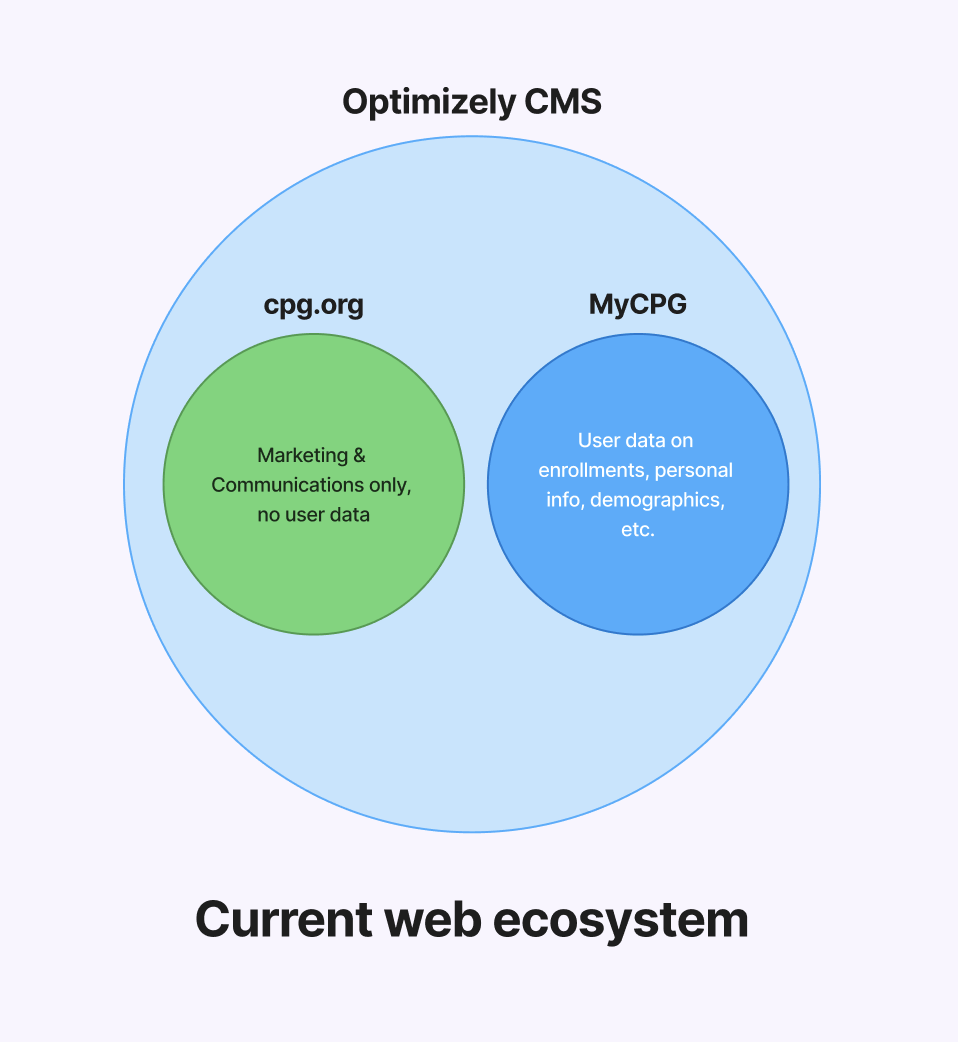
At the same time, our organization already possessed meaningful information about many of our users through authenticated self-service portals, yet none of that context informed their experience on the public website. The website and the self-service portal functioned as separate products despite serving the same audience.
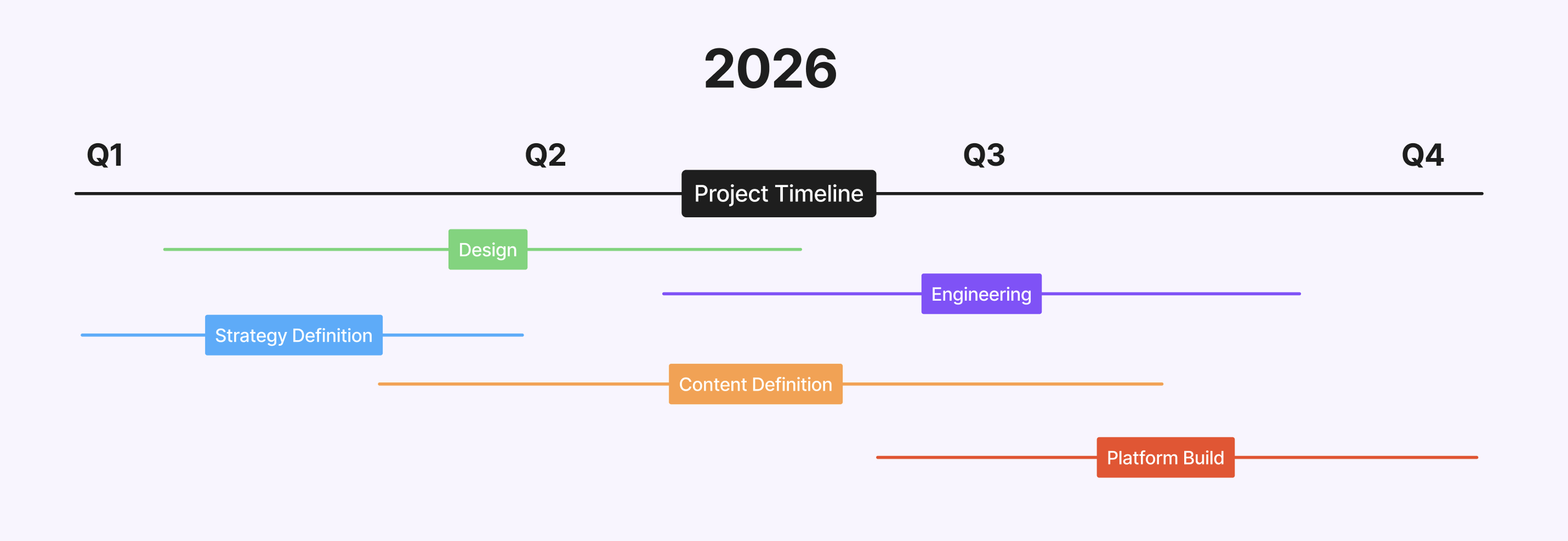
As part of a company-wide initiative to refresh CPG.org, I served as the Design Workstream Lead alongside Platform and Content workstream leads.
Together, we set out to define a scalable personalization strategy that could surface relevant information more quickly, respect user trust, remain manageable for a small content team, and provide a foundation for future digital initiatives.
backgroundOur audience is exceptionally diverse. Broadly, our users fall into three primary groups:
Clergy
Lay Employees
Administrators
Within those groups, users may participate in different pension plans, healthcare plans, and additional benefit offerings.
They also engage with educational resources, publications, events, retirement planning information, and organizational news.
Historically, every visitor experienced largely the same website regardless of who they were or which benefits they were enrolled in.
This created several challenges:
Users often had to sift through extensive content libraries.
Relevant educational materials were difficult to discover.
Communications teams had limited ability to target content.
Existing member data could not enhance the website experience.
The public website and authenticated portal operated independently.
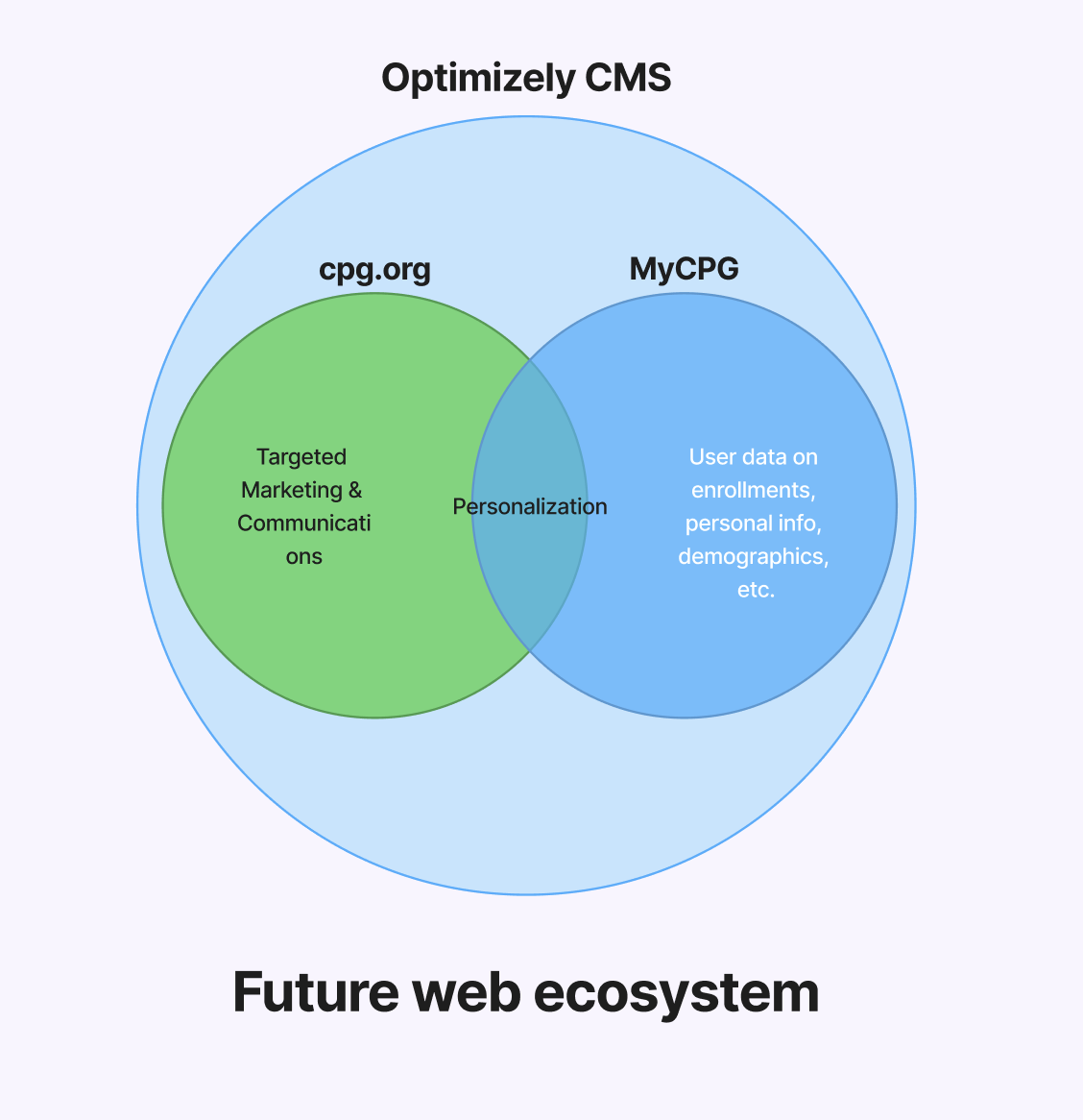
Our objective was not simply to personalize pages. It was to begin connecting our digital ecosystem.
the opportunityRather than treating personalization as a feature, our team viewed it as a long-term product strategy.
The goal was to help users reach relevant information faster while preserving their ability to freely explore the website.
A core principle quickly emerged:
Guide users toward relevant information without hiding information from them.
This was especially important because administrators often access information on behalf of other users. Personalization needed to prioritize relevance, not exclusivity.
DEFINING THE PERSONALIZATION STRATEGYOur team established three complementary approaches.
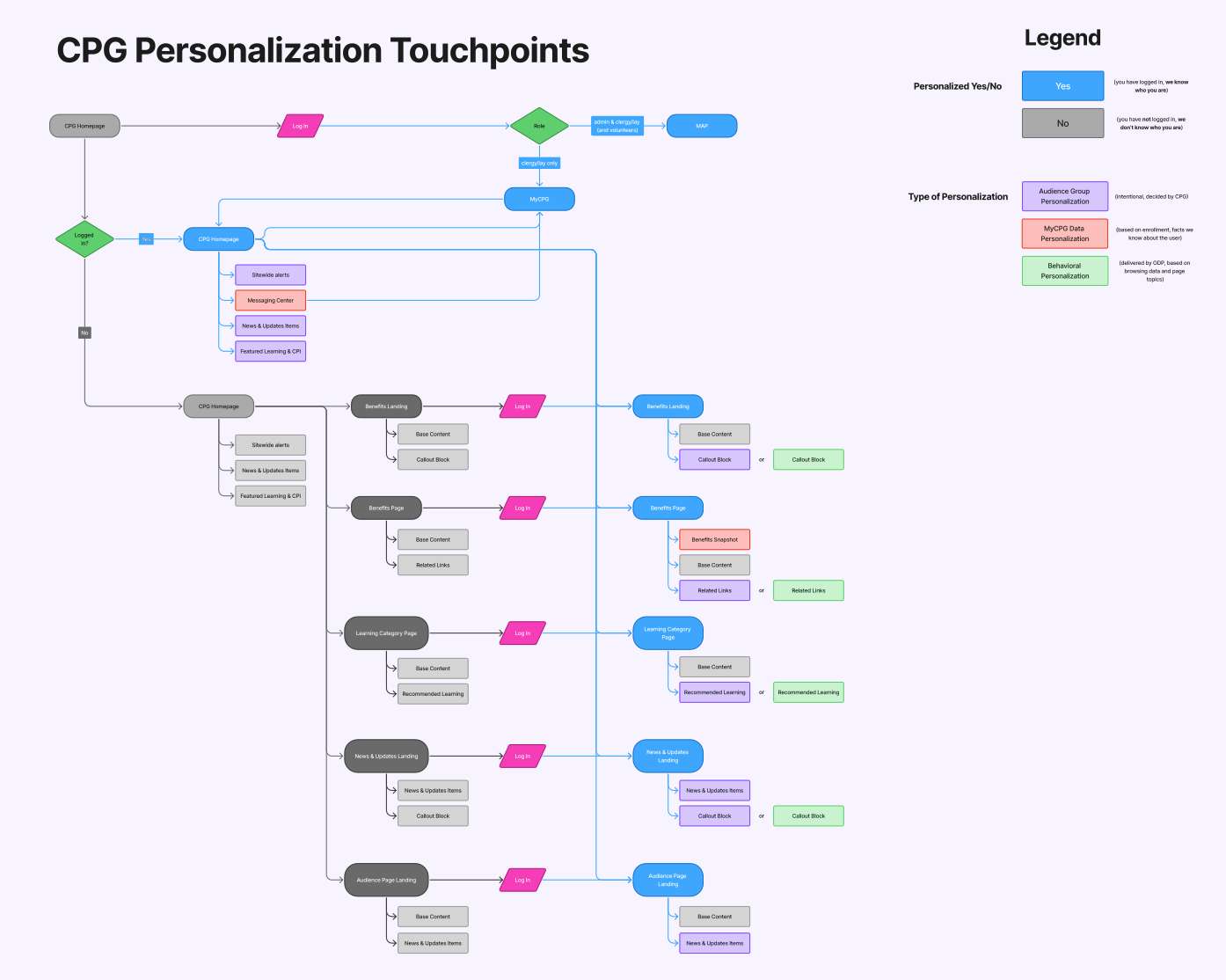
Identity-Based Personalization (1:1) - Leverage authenticated user data to surface enrollment information, benefit details, and other relevant information where appropriate. Potential signals included: benefit enrollments, pension enrollments, employment status, and life stages.
Audience-Based Personalization (1:Many) - Rather than creating unique experiences for every individual, users could also be grouped into audience segments. These audience definitions could power recommendations for: Articles, Events, Educational resources, Benefit information
Behavioral Personalization - Finally, we explored recommendation systems based on browsing behavior. Rather than replacing editorial strategy, behavioral recommendations would complement it by helping users discover related content naturally. Throughout the project we continually evaluated when automation added value and when editorial oversight should remain in control.
my roleI served as one of three workstream leads throughout the initiative, leading the UX and Design workstream from project kickoff through implementation.
My responsibilities included:
Participating in personalization strategy workshops
Comparative research and user testing
Leading the UX and product strategy
Defining the overall personalization experience
Designing reusable components and interaction patterns
Creating implementation-ready designs for engineering
Collaborating with Technical Solutions Analysts and engineers
Working closely with Engagement Strategy and Communications
Designing CMS workflows supporting personalization
Helping define metadata and taxonomy structures
Ensuring solutions aligned with long-term business goals
While my title was UX/UI Designer, my role extended into product strategy and systems design, ensuring personalization was valuable for users while remaining scalable for the organization.
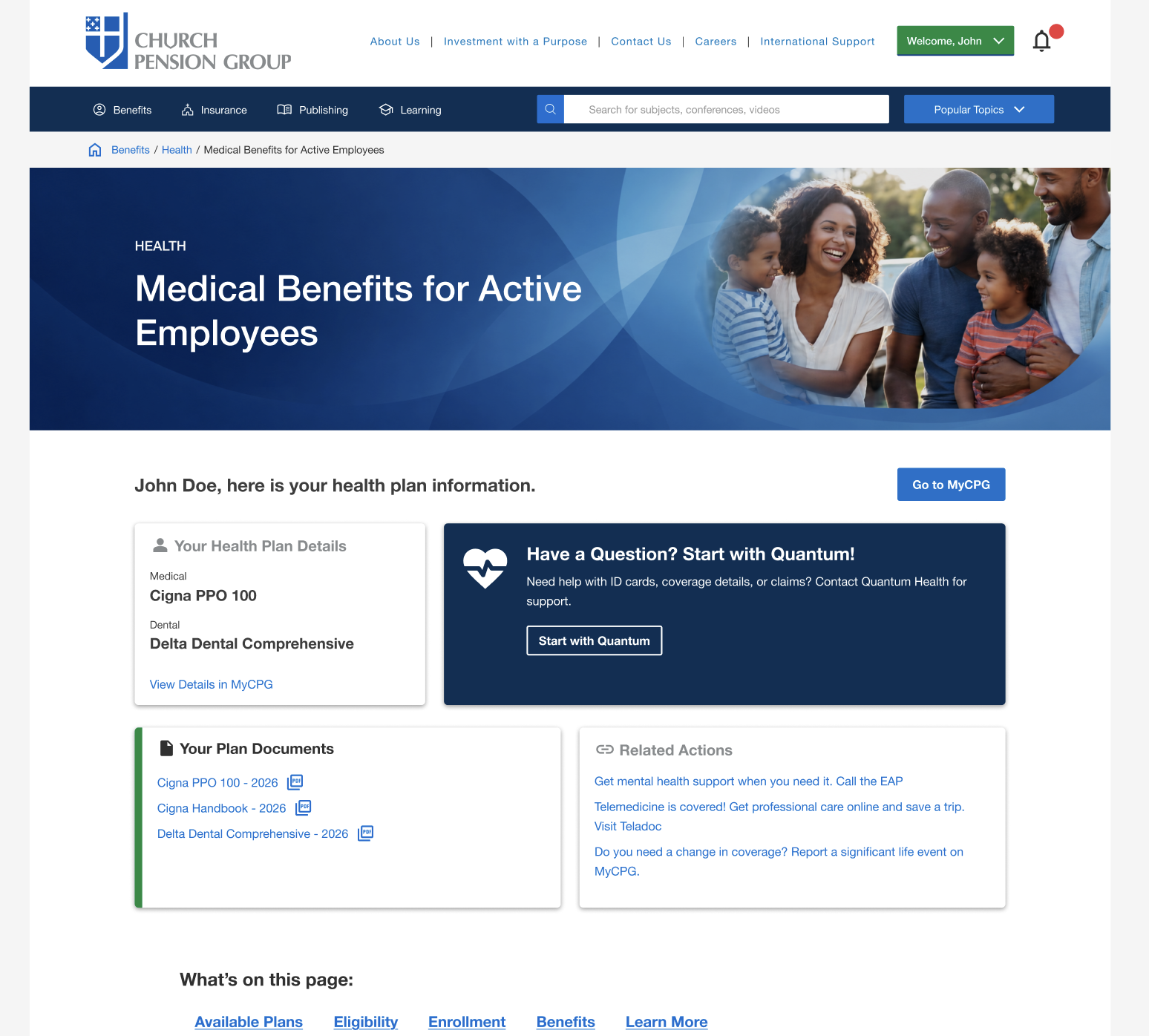
designing the experienceOne of my primary responsibilities was defining what personalization should feel like.
We wanted users to experience moments of discovery rather than feel like the website already knew everything about them. That philosophy informed every interaction. Highlights included:
Redesigning the authentication entry point
Designing modular personalization components
Defining how recommendations integrate alongside existing content - Creating variants supporting different audience groups
Establishing messaging indicating when content was “for you”
Instead of overwhelming users with personalized experiences, recommendations were woven into existing content so they felt natural and helpful. The result was a system that encouraged exploration while reducing the effort required to discover relevant information.
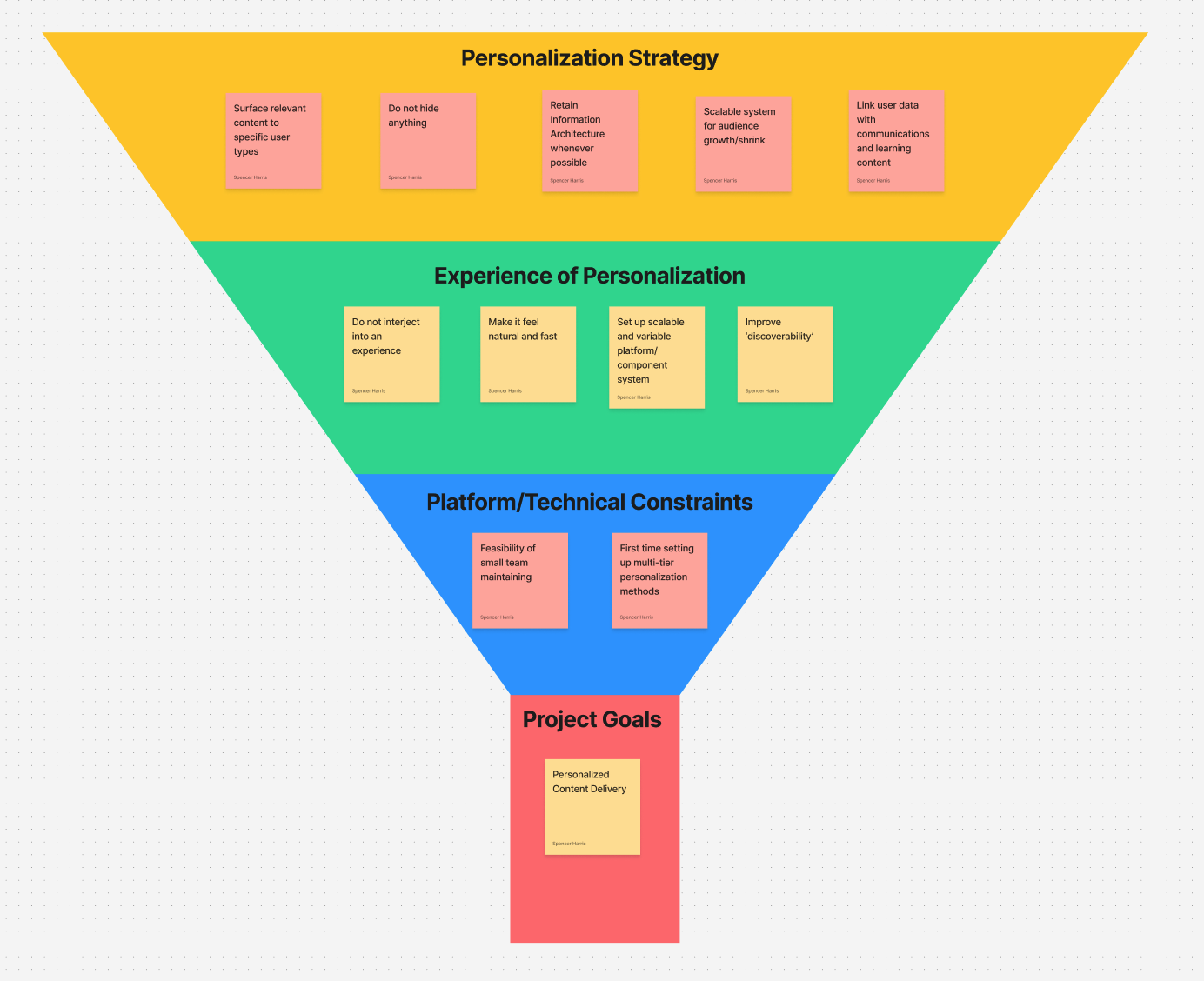
DESIGNING THE SYSTEM BEHIND THE EXPERIENCEOne of the most challenging aspects of the project wasn’t what users would see—it was designing the infrastructure supporting it.
Our content team is relatively small, so every personalization decision required us to consider long-term governance.
I helped define:
Metadata taxonomy
Audience tagging
Recommendation relationships
CMS authoring workflows
Dynamic News & Updates architecture
The objective was to build one scalable system rather than dozens of manually maintained content experiences.
Every feature required balancing user value against editorial effort. Sometimes that meant saying no to ideas that introduced unnecessary complexity.
Other times it meant allowing automation to manage recommendations instead of requiring manual curation.
design challengesBalancing Personalization and User Trust
Our audience includes many long-time users who may not expect heavily personalized experiences.
We intentionally designed personalization to feel subtle.
Rather than interrupting a user’s journey, we focused on creating “aha” moments where relevant content naturally surfaced at appropriate times.
Scalability vs. Editorial Complexity
Supporting roughly thirty audience groups could quickly become a governance challenge.
Every recommendation system was evaluated through the lens of sustainability.
Could a small content team realistically maintain it? Would it scale as additional business initiatives were introduced?
Technical Constraints
Historically, the organization maintained a clear separation between its marketing website, authenticated member data, and protected information.
Implementing personalization required close collaboration with engineering and technical stakeholders to determine what was feasible while respecting privacy and existing architecture.
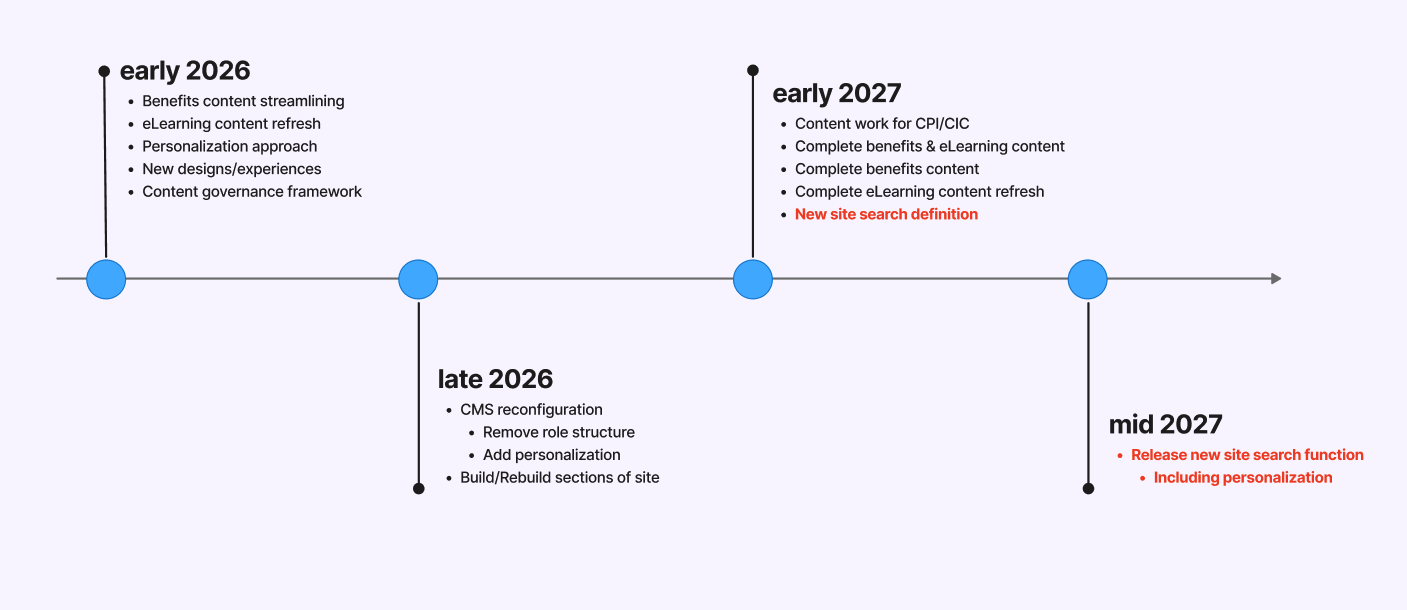
looking forwardThe initial implementation is one phase of a much broader vision.
The personalization framework is intended to support future initiatives by:
Strengthening connections between the public website and authenticated services
Improving discoverability of educational resources
Supporting targeted communications
Providing a reusable recommendation framework
Establishing scalable metadata and governance standards
Rather than solving a single business problem, the project creates a foundation for future digital experiences.
Our next big venture that will utilize the personalization structure we are setting up will be redesigning the site search experience. This will not only be a front-end change for the user that enhances their experience, but also a back-end change as well, where we intend to implement a conversational AI-driven model. This new system will parse our assets and learning modules to deliver answers to the user in a conversational and human manner.
reflectionThis project fundamentally changed how I think about personalization.
The most difficult challenge wasn’t designing components, it was designing a system that balanced user value, business goals, editorial capacity, and technical feasibility.
I learned that successful personalization is less about showing users everything you know about them and more about helping them discover the right information at the right time.
As Design Workstream Lead, I contributed not only to the user experience, but also to the broader product strategy, content architecture, and implementation model that will allow personalization to evolve long after the initial launch.
Ultimately, the project reinforced an approach I now bring to every product: build systems that scale, respect users, and create lasting organizational value.